

Why Only 2% of Americans Fully Trust AI
Understanding the gap between what AI is and what we’re told it is.

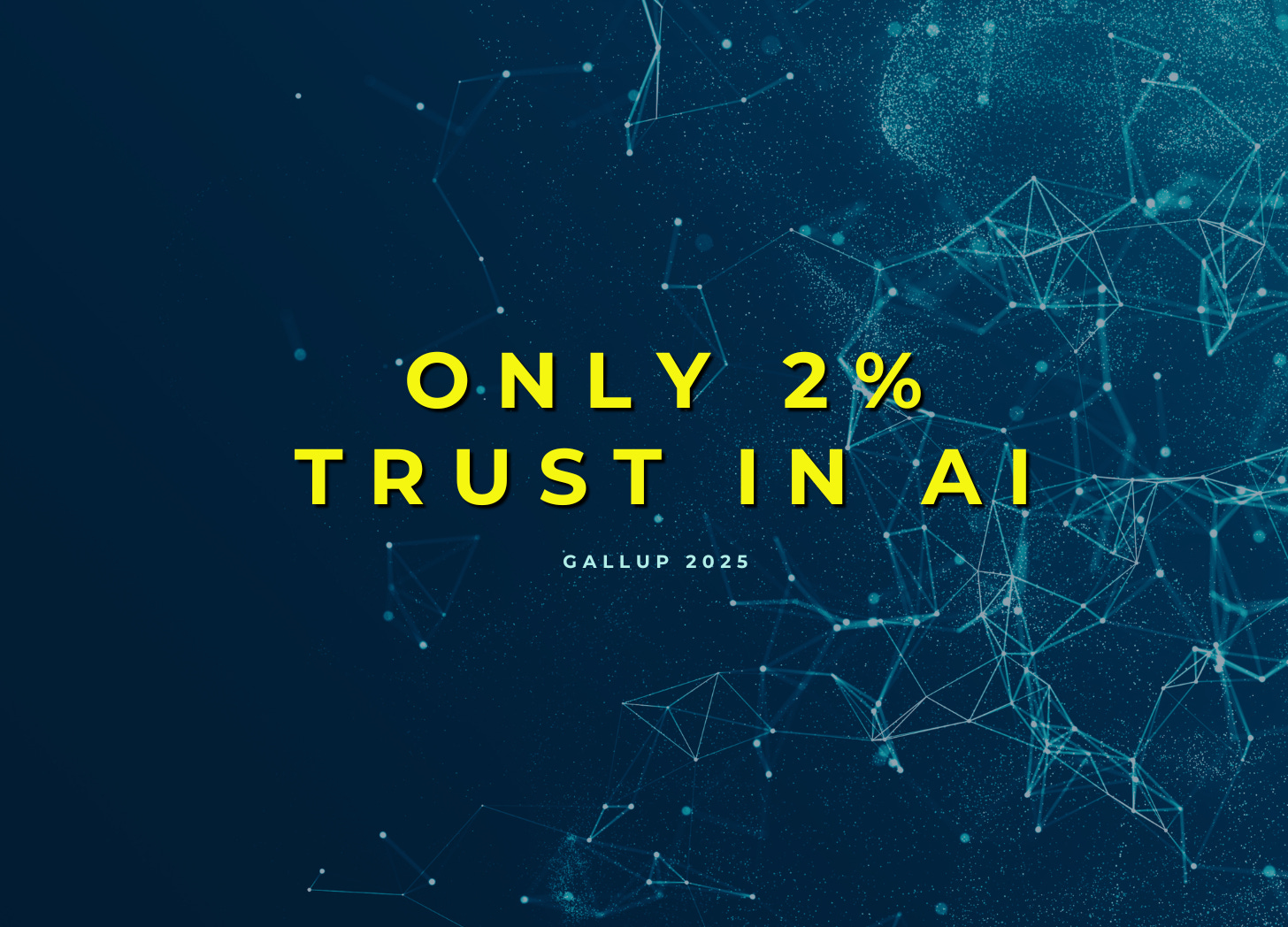
If you feel cautious about AI, you’re in the majority.
According to Gallup, only 2% of Americans fully trust AI to make fair, unbiased decisions. Another 29% trust it “somewhat,” which still leaves most of the country unsure, uneasy, or unconvinced.
And who can blame them? Nothing about the public conversation feels honest, consistent, or complete.
One expert says AI will save humanity.
Another says there’s a 10–30% chance it ends it.
Corporations call it a harmless productivity booster.
White-collar workers say it’s taking their jobs.
Schools call it a “learning assistant.”
Kid’s say it’s their “best friend.”
Politicians can’t decide whether to regulate it or hand it out like candy.
Meanwhile, regular folk are noticing things they’re not supposed to notice:
Why are electricity bills rising in towns that just approved new data centers?
Why are power companies warning that AI demand may strain the grid?
Why do tech firms say AI will “make everything cheaper” while spending hundreds of billions to build it?
Why are children being told to embrace AI before adults are told what it actually is?
The confusion isn’t coming from the technology. It’s coming from the stories being told about it and who benefits from those stories.
And underneath all of it is a simple truth:
You can’t protect yourself from something you’re not allowed to understand.

Where the Confusion Really Comes From
After months of conversations with experts, parents, teachers, and readers here, I’ve noticed that most of the public debate about AI rests on five major misconceptions.
Once you see them, a lot of today’s noise suddenly becomes clear.
The Five Misconceptions About AI
1. “AI is just another tool.”
A hammer is a tool. A car is a tool. You design it, test it, understand it.
AI isn’t that kind of tool. It learns, changes, and behaves in ways its creators can’t fully map. LLMs (the chat apps we see) are just the surface. The real system underneath is far larger and far less predictable.
2. “AI is programmed.”
People picture developers writing tidy lines of code. Modern AI doesn’t work that way. Developers don’t script the answers. They create a system that teaches itself from mountains of data. The model’s behavior comes from the patterns it absorbs not from a list of human instructions.
3. “The developers are in control.”
Behind closed doors, you hear very different stories:
“We don’t know why it did that.”
“We don’t fully understand the internal steps.”
“We fixed one problem and created another.”
It’s not that developers are irresponsible. It’s that the systems are no longer fully traceable.
4. “The experts know where this is going.”
Some experts predict human prosperity or perfect healthcare and miracle cures, while others predict social collapse, mass employment, or even, human extinction.
The only thing the experts seem to agree on is uncertainty.
5. “AI literacy means learning the tools.”
Real literacy isn’t learning prompts or shortcuts, it’s knowing what the system really is behind the curtain, ie. Where the data comes from. How the model learns. What we don’t know. What can’t be predicted. And why corporations are racing to install AI in every school, workplace, and household before any of us truly understand it.
This is why I wrote my new essay, “AI in Schools Can Wait. Adult Understanding Can’t” which explains how policymakers, educators, and corporations are making decisions based on these very misconceptions.
What other misconceptions would you add to this list?
If You’re a Parent or Grandparent
You don’t need to become an AI expert, you just need to understand the basics of how the brain develops and why children are so easily shaped by the systems and tools we place in front of them.
That’s why I wrote Defending My Child’s Brain, which many early subscribers here received for free months ago. It teaches:
• how kids think at each age
• why certain behaviors are normal (but often misunderstood)
• how manipulation targets developmental gaps
• how to communicate with more calm and clarity
• how to strengthen a child’s identity and confidence — the best protection of all
The Epoch Times recently released a beautifully designed edition of the guide.
👉 Get it here & Stay Tuned for a Print Version Coming Next Week!

Even if you don’t have young kids, this guide helps you support nieces, nephews, grandchildren, friends—anyone whose developing mind you care about.
A Simple Takeaway & a Question for You
Remember, feeling uncertain about AI is your human intelligence and discernment in action. You’re not supposed to take something seriously until you’re allowed to understand it.
This newsletter community exists to help us understand it calmly, clearly, and without fear.
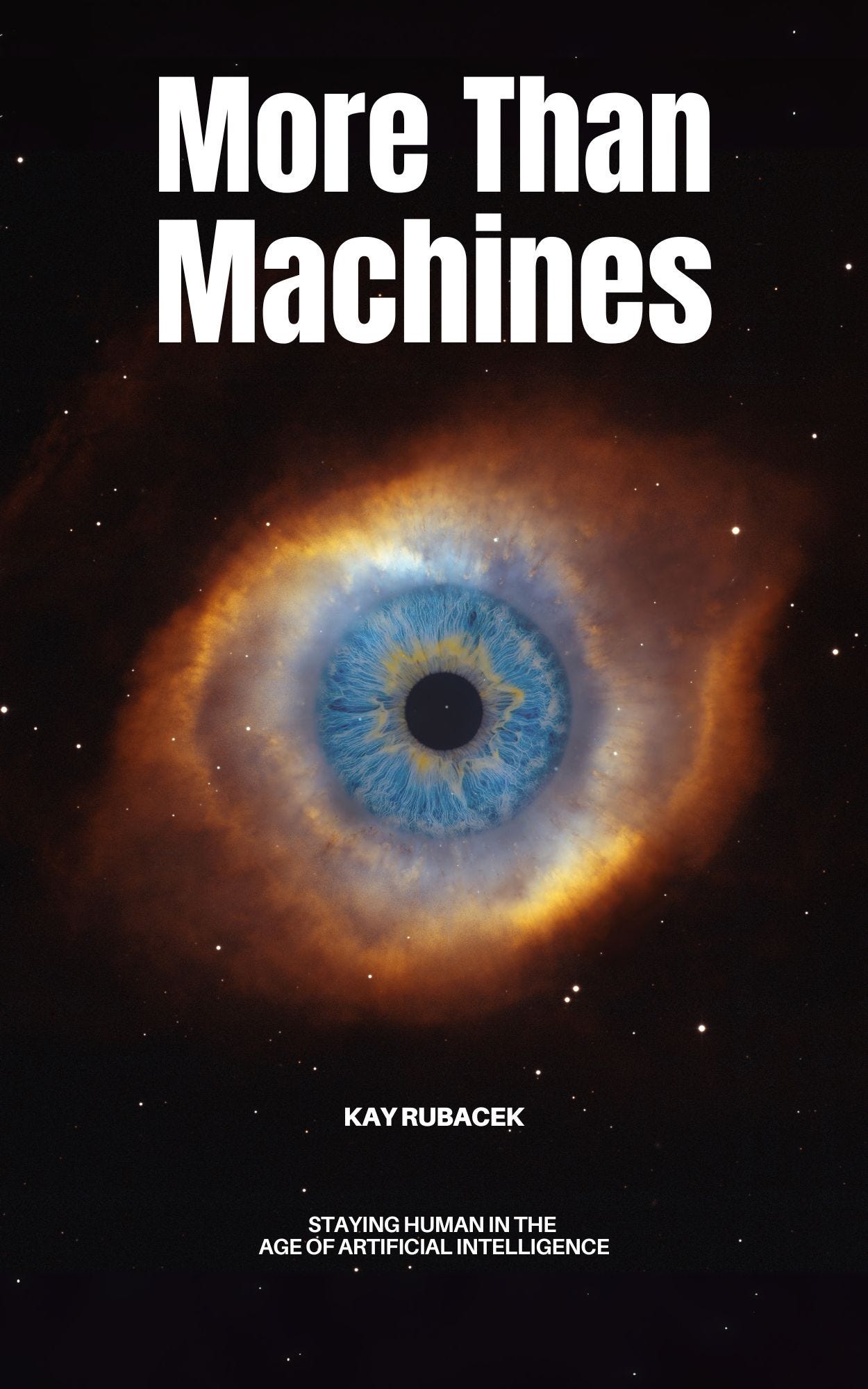
Over the next few months, I’m putting together a book called:
More Than Machines: Staying Human in the Age of Cognitive Capture,
which will bring together my published essays, relevant investigations, and several new pieces I’ve never shared before.
Before I finish it, I’d love input from you.
What do you want to understand about AI?
What worries you most?
What confuses you?
What have you learned this year that surprised you?
And what would you like explained in calm, human language rather than tech jargon?
Your questions will help shape the final chapters and the direction of future newsletters.
Comment below to join the discussion with others or hit reply to this email. I read every message.
Wishing you calm in the chaos,
~ Kay
PS. I know so many of you are solid and steady but you may see people you love struggling. If someone in your life could use a calmer mind or a clearer path through stress, feel free to point them my way. No pressure, just an open door, and an open ear.

About the Author
Kay Rubacek is an award-winning educator, filmmaker, author, and mother. Detained in a Chinese prison in 2001 for her human-rights advocacy, she has since dedicated her work to exposing the systems and ideologies that diminish human life and human sovereignty. She is also a certified Stress Consultant.