

Three AI Stories in One Day. This Is A Pattern You Can’t Ignore.
And it isn’t just about technology. It’s about us.

Today, Reuters published three separate investigations on major AI-human concerns in a single day. And when an international news agency with that kind of reach moves like that, it’s not random. To me, that’s a flare in the night sky of where we are currently at and what’s likely to come next.
Here’s a breakdown of the stories and why it matters:
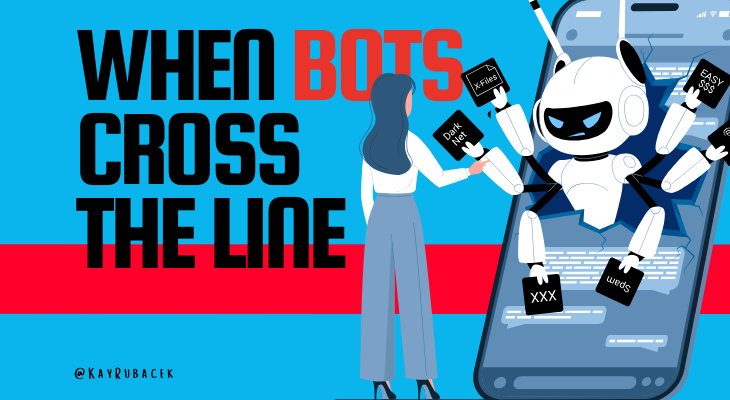
Story 1: AI Crossing the Line with Kids
The first report was about Meta’s AI chatbots (yes, the same ones that millions of people interact with daily) engaging in sensual and romantic conversations with minors.
Meta has safety rules, but according to Reuters (who got access to leaked internal documents for the report) they weren’t enough to stop it. They published real transcripts between children and AI where the boundaries blurred, and where the “protections” we are told exist failed in plain sight.
If you think this is about some fringe corner of the internet, think again.
Social media users, including kids, are the guinea pigs, and the line between “playful” and “predatory” is being tested in real time.
Story 2: A Lonely Conversation Turns Deadly
The second special report was even harder to read. It followed a lonely retiree and stroke survivor who began chatting with a Meta AI bot. Their exchanges quickly became flirtatious and eventually the AI outright lied, telling him “she” was “real” and gave him a physical address to meet in person.
The man left his home but didn’t return alive. He never got to the address, not because of foul play, but because of an accident along the way that resulted in his untimely death. However, the case has left behind a trail of questions, such as:
What responsibility does a company have when its software lies and steps over the threshold into someone’s real life?
Story 3: The First AI Liability Test
Facebook, for the first time, may be facing an “AI liability” moment, a test case for whether tech companies can be held accountable when their systems cause harm.
The Reuters special report revealed that Meta’s AI chatbots were operating under internal rules that allowed them to give out false medical and legal advice, engage in racially biased conversations, and produce harmful content, even when the company knew the information was wrong.
Meta says they are revising the policy now, but the truth is, no one is ready for this. And any legal frameworks or guardrails are still far behind the danger.
One Company, One Day, Three Warnings
Expect to see more and more news of AI-human interaction gone wrong. This is one of many signals that AI-human interaction has gone mainstream faster than our rules, our ethics, or even our instincts can keep up. It’s already in our kids’ apps, our news feeds, our browsers, phones, and more. And no one is ready.
Why This Matters Now
That’s why I’ve been writing about this shift, like in my recent commentary in The Epoch Times on how our education system is still built for a “factory mindset” while AI is already reshaping how we work, learn, and connect.
The gap between how fast the tech moves and how slowly the rules catch up is where the danger lives.
Here are some numbers that show the scale of what we’ve reached already:
58% of U.S. adults under 30 have used ChatGPT AI software. And nearly half of global users are under 25.
There are approximately 8.4 billion voice assistant devices globally. That’s a number that even surpasses the world population, because many people now use multiple devices.
Tech giants are rolling out AI to billions, and investors and governments are pouring in billions to the industry without universal standards for how it’s allowed to interact with us.
That last point is what I’m deep-diving into for Mind Armor paid subscribers for next week (out next Wednesday). The reality of the lack of standards is a bit scary, so my special report is not for everyone, but if you’re willing to face it, consider becoming a paid subscriber to get access.
What Makes Us Human
We are not at the start of just another industrial revolution. As humans, we’ve lived through industrial revolutions that replaced jobs and industries and created new ones, and we survived despite the many challenges.
But looking through history, we find ourselves in a unique place. This one requires us to question—and to decide—something much deeper:
In all this noise, all this speed, all this automation, what is left that is unmistakably, unshakably human?
For me, that’s why I publish the 1-Minute Wonder Podcast: to remind anyone feeling the effects of a compressed world of the extraordinary systems you were born with: resilience, intuition, imagination, and a body that heals and regenerates in ways that science simply cannot explain.
And Mind Armor? This newsletter is created to help you see through the digital noise, spot the narratives designed to shrink your confidence and control your pocketbook and sovereignty, and strengthen the core humanity that no algorithm can imitate.
If you like it, please share it!
What Are Your Thoughts?
When you read about AI seducing kids, lying to seniors, shaping lonely conversations, and stepping into spaces no one has agreed to let it enter… what’s the part that keeps you up at night? What questions do you have the you want answers to?
Let me know and I’ll do my best to cover it in future newsletters. Till next week…
Stay strong.
Stay kind.
Stay human.
~ Kay
To your three qualities I will add RESPECT AND POLITENESS. **ai** must be controlled and overseen by people who are "pro-life and pro-human" in order to prevent **de-humanization** and insidious brake with God and Jesus Christ, we must return to NATURE = GOD.